
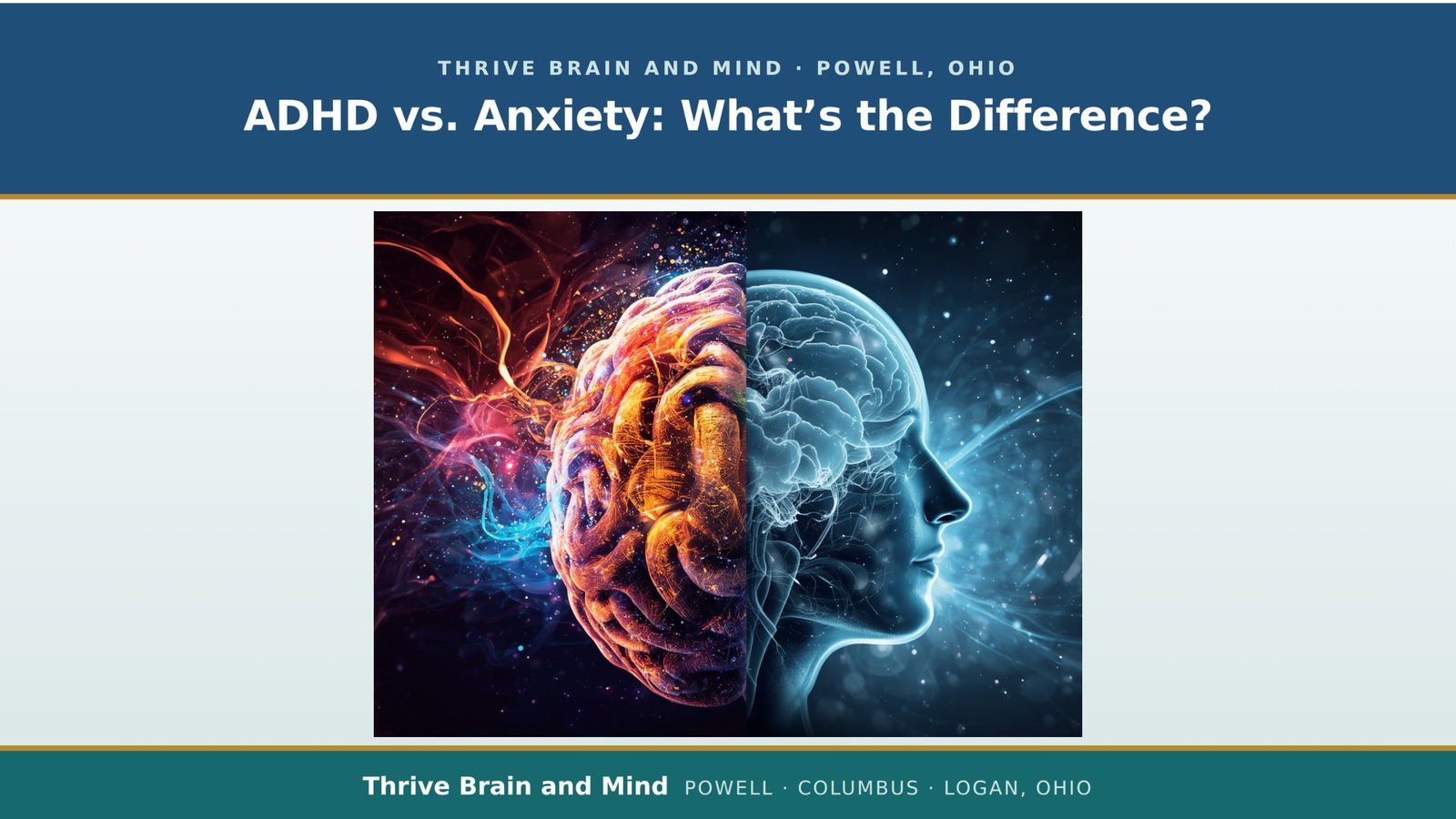
If you’ve ever asked yourself: “Why can’t I focus?” “Why do I keep procrastinating?” “Why does my mind never stop running?” “Do I have ADHD or am I just anxious?” — you’re not alone. In fact, this has become one of the most common questions I hear in practice.
Attention-Deficit/Hyperactivity Disorder (ADHD) and anxiety disorders are two of the most frequently diagnosed mental health conditions in the United States. They are also two of the most commonly confusing. The reason is simple: many of the symptoms overlap — difficulty concentrating, restlessness, trouble sleeping, feeling overwhelmed, racing thoughts, procrastination, forgetfulness.
From the outside, ADHD and anxiety can look remarkably similar. But underneath, they are very different conditions — and treating the wrong one often leads to years of frustration.
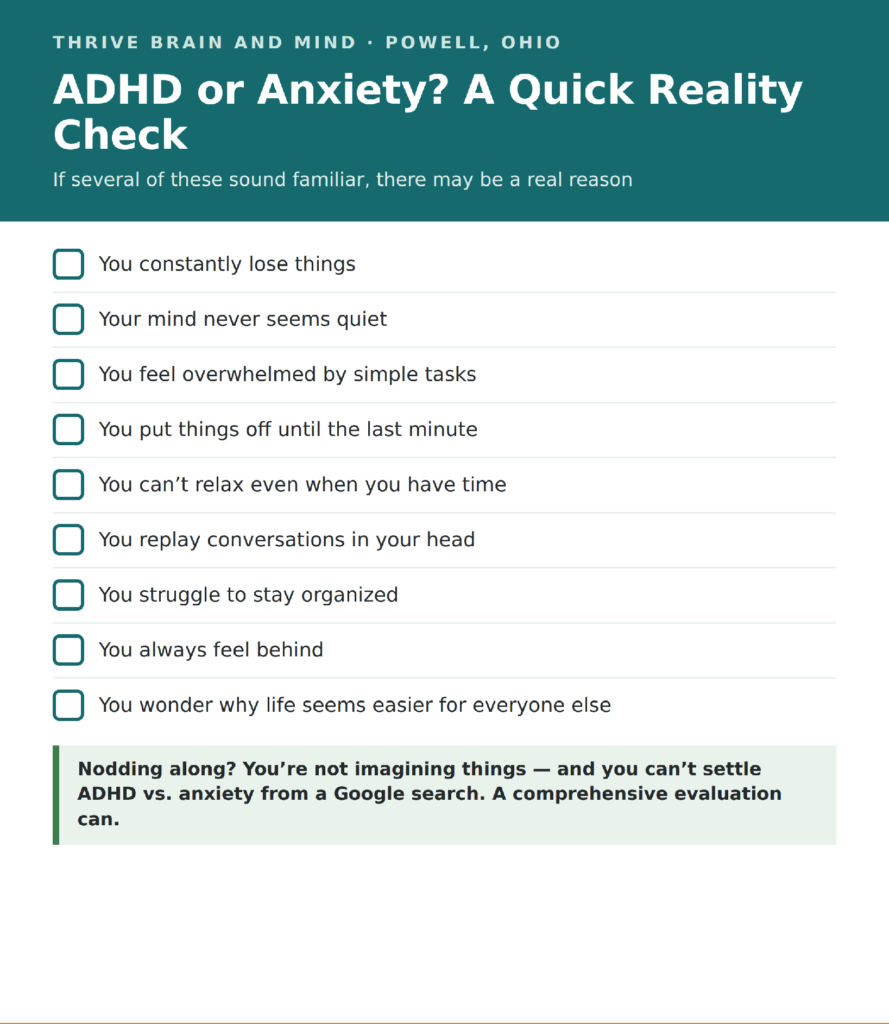
Quick reality check
If several of these sound familiar, keep reading: you constantly lose things. Your mind never seems quiet. You feel overwhelmed by simple tasks. You put things off until the last minute. You can’t relax even when you have time. You replay conversations in your head. You struggle to stay organized. You always feel behind. You wonder why life seems easier for everyone else.
If you’re nodding your head right now, you’re not imagining things. There may be a real reason.
“The goal isn’t to label you. The goal is to understand what’s really driving your symptoms so we can treat the right problem.”
Why This Question Matters So Much
Many patients arrive in my office believing there’s something fundamentally wrong with them. They’ve been called lazy. Disorganized. Unmotivated. Overly emotional. Poor at managing stress. The reality is often very different.
I’ve had professionals, business owners, physicians, teachers, parents, and executives receive an ADHD diagnosis for the first time in their 40s, 50s, and even 60s. Many say the same thing: “I thought this was just my personality.” Others are convinced they have ADHD only to discover that anxiety has been quietly driving most of their symptoms for years.
The distinction matters because the treatments are different. A medication that helps ADHD may not help anxiety. A treatment designed for anxiety may leave ADHD symptoms completely untouched. Getting the diagnosis right is often the most important step.
What ADHD Actually Feels Like
When most people think about ADHD, they picture a hyperactive child running around a classroom. Adult ADHD usually looks very different. In adults, ADHD often feels like constant mental clutter, chronic overwhelm, difficulty prioritizing, poor organization, forgetfulness, inconsistent focus, and difficulty finishing projects.
Many patients describe feeling like their brains have twenty tabs open simultaneously. You want to focus. You try to focus. But your attention seems to have other plans.
You may recognize yourself if:
- You read the same paragraph three times
- You forget why you walked into a room
- You lose your keys weekly
- You pay bills late despite having the money
- You start projects enthusiastically but never finish them
- You underestimate how long tasks will take
- You feel overwhelmed by administrative tasks
One of the biggest misconceptions about ADHD is that people can’t pay attention. That’s not actually true. People with ADHD can often focus intensely on things they find interesting. This phenomenon is called hyperfocus. You may spend six hours researching a hobby but struggle to answer a two-minute email. This isn’t laziness. It’s difficulty regulating attention.
What Anxiety Actually Feels Like
Anxiety looks entirely different once you understand what drives it. While ADHD often feels like attention drifting away, anxiety feels like attention getting trapped. Patients often tell me: “I can’t turn my brain off.” “I’m always waiting for something bad to happen.” “I overthink everything.” “I replay conversations constantly.” “I keep imagining worst-case scenarios.”
Instead of attention wandering, anxiety causes attention to lock onto worries. You become mentally absorbed by possible mistakes, dangers, problems, or future outcomes. Imagine carrying a mental alarm system that never fully shuts off. That’s how many people with anxiety describe it.
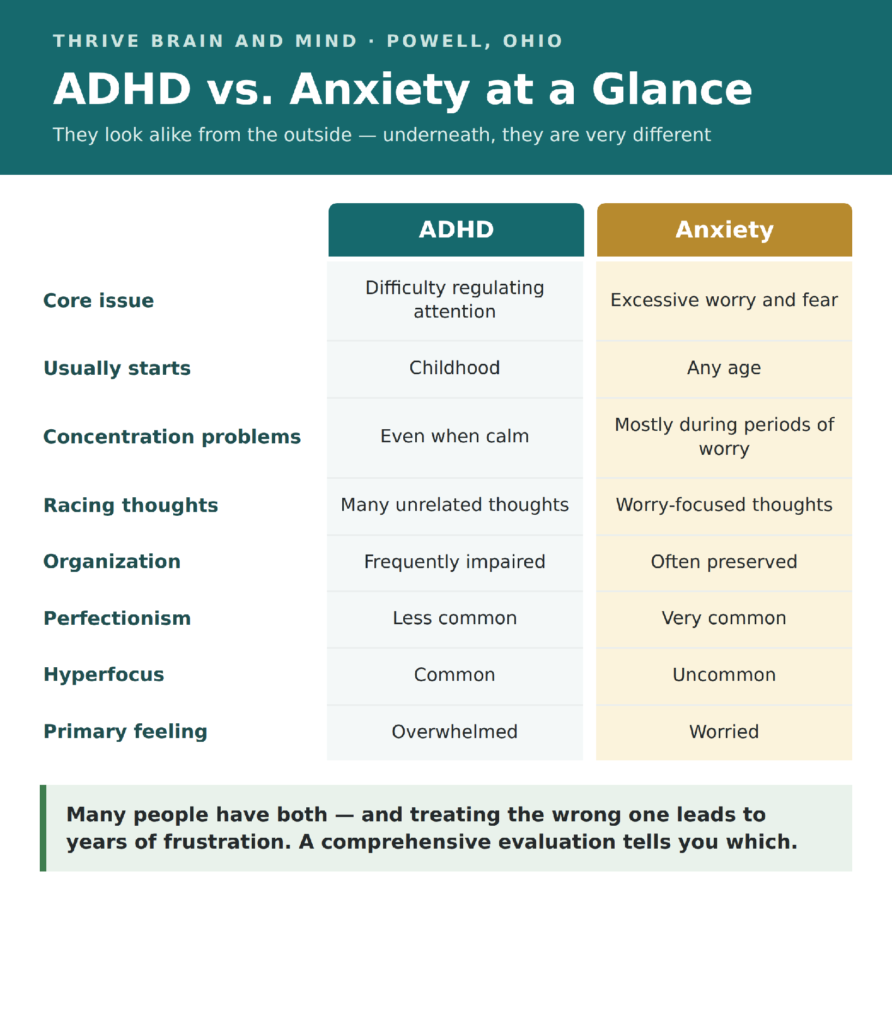
ADHD vs. Anxiety: Side-by-Side
| Feature | ADHD | Anxiety |
|---|---|---|
| Core Issue | Difficulty regulating attention | Excessive worry and fear |
| Usually Starts | Childhood | Any age |
| Concentration Problems | Even when calm | Mostly during periods of worry |
| Racing Thoughts | Many unrelated thoughts | Worry-focused thoughts |
| Organization | Frequently impaired | Often preserved |
| Missing Deadlines | Common | Less common |
| Perfectionism | Less common | Very common |
| Physical Symptoms | Less prominent | Common |
| Hyperfocus | Common | Uncommon |
| Primary Feeling | Overwhelmed | Worried |
Still Not Sure Which One Fits?
Many adults spend years treating the wrong condition. Some take anxiety medication while untreated ADHD continues to create problems. Others pursue ADHD treatment while severe anxiety remains the true cause of their suffering.
The good news? A comprehensive psychiatric evaluation can usually identify what is actually happening. A good evaluation looks beyond a checklist. It considers when symptoms began, whether they appeared in childhood, what triggers them, how they affect work or relationships, and whether sleep, depression, trauma, medical issues, or substance use may be contributing.
Can You Have Both?
Absolutely. And this is where things get tricky. Many people don’t have ADHD. Many don’t have anxiety. Many have both. In fact, untreated ADHD can often lead to anxiety over time.
Imagine years of missing deadlines, forgetting commitments, losing things, struggling with organization, and getting criticized despite your effort. Eventually, your brain learns to expect problems. That chronic stress can evolve into genuine anxiety. When this happens, both conditions may require treatment.
“Many patients don’t have ADHD or anxiety. They have ADHD and anxiety. That’s where careful diagnosis becomes essential.”
Why People Get Misdiagnosed
Social media has dramatically increased awareness of ADHD. In many ways, that’s a positive development. Adults who were overlooked in childhood are finally finding answers. However, symptom checklists on social media have limitations.
Difficulty focusing does not automatically mean ADHD. Feeling restless does not automatically mean anxiety. The real question is: why are those symptoms happening? The answer determines treatment.
At Thrive Brain and Mind, evaluations examine: childhood history, academic experiences, occupational functioning, medical history, family history, current symptoms, previous treatments, and co-existing conditions. Mental health diagnoses are rarely made from a single symptom. They’re made by understanding patterns over time.
Insurance and Getting the Right Support
One of the most common concerns patients have is: “What if I finally get evaluated and insurance won’t help?” The good news is that both ADHD and anxiety are recognized medical conditions, and many insurance plans provide coverage for evaluation and treatment.
Coverage varies by plan but may include psychiatric evaluations, medication management, psychotherapy, Cognitive Behavioral Therapy (CBT), ADHD treatment, anxiety treatment, and depression treatment. At Thrive Brain and Mind, our team helps patients understand the benefits and treatment options whenever possible.
Most importantly, a diagnosis is not the finish line. It’s the beginning of a road map.
“A diagnosis isn’t the finish line. It’s the beginning of understanding yourself — and building a treatment plan that actually works.”
What Treatment Looks Like
The encouraging news is that both ADHD and anxiety are highly treatable. The key is identifying what is driving the symptoms first. A treatment plan for ADHD looks different from a treatment plan for anxiety, and many patients need a combined approach when both conditions are present.
If ADHD is the primary diagnosis
Treatment may include stimulant medications, non-stimulant medications, Cognitive Behavioral Therapy (CBT), executive functioning coaching, sleep optimization, and lifestyle interventions. Many patients experience dramatic improvements once the underlying ADHD is addressed. Medication can improve focus, impulse control, and task initiation, but skills-based support is often just as important — CBT and executive-function coaching can help patients build systems for planning, prioritizing, time management, and follow-through.
If anxiety is the primary diagnosis
Treatment may include Cognitive Behavioral Therapy (CBT), exposure-based therapy, Selective Serotonin Reuptake Inhibitors (SSRIs), Serotonin-Norepinephrine Reuptake Inhibitors (SNRIs), stress management strategies, and lifestyle modifications. When anxiety improves, concentration often improves as well. Anxiety treatment focuses on quieting the worry cycle, reducing avoidance, and helping the nervous system feel less constantly activated — therapy can teach patients how to respond differently to anxious thoughts, while medication may help reduce the intensity of physical and emotional symptoms.
What If Depression Is Also Part of the Picture?
ADHD, anxiety, and depression frequently occur together. Sometimes patients come in seeking ADHD treatment but discover depression is contributing significantly to their cognitive struggles. Others have anxiety that ultimately stems from years of untreated depression. For patients whose depression has not adequately responded to traditional treatment, interventional psychiatry may become part of the conversation.
TMS (Transcranial Magnetic Stimulation)
TMS is an FDA-cleared, non-invasive treatment that uses magnetic pulses to stimulate mood-regulating brain circuits. No medication. No sedation. No recovery time. From an indication standpoint, TMS is best understood as an evidence-based, FDA-cleared treatment for major depressive disorder, including patients whose depression has not improved adequately with antidepressant medication. It is also FDA-cleared for certain other conditions, such as obsessive-compulsive disorder and smoking cessation, depending on the device and protocol used.
For anxiety, the distinction is important: TMS is not generally considered a stand-alone FDA-cleared treatment for primary anxiety disorders. However, some TMS systems and protocols have clearance for reducing anxiety symptoms when they occur together with major depressive disorder. In other words, TMS may be clinically relevant when anxiety is part of a depressive episode, but using TMS specifically for an anxiety disorder alone is typically considered off-label.
For ADHD, TMS remains an investigational or off-label use. Research is ongoing because ADHD involves attention regulation and executive-function networks, but TMS is not currently a standard FDA-cleared ADHD treatment. For patients with ADHD symptoms and significant depression, TMS may still be considered for the depressive component while ADHD is treated with established options such as medication, behavioral strategies, coaching, and psychotherapy.
Age eligibility depends on the device, diagnosis, and clinical setting. Historically, TMS was used primarily for adults with depression, but newer clearances now include adolescent patients as young as 15 for major depressive disorder when used as an adjunctive treatment. For younger patients, treatment decisions require careful evaluation, parental involvement when appropriate, review of prior treatments, and confirmation that the target condition is depression rather than ADHD or anxiety alone.
Spravato® (Esketamine)
Spravato (esketamine) is an FDA-approved treatment for treatment-resistant depression administered under clinical supervision. Because it works through different brain pathways than traditional antidepressants, it can help patients who have not responded adequately to standard treatments like SSRIs and SNRIs.
This indication is significant because treatment-resistant depression means symptoms have not improved enough after adequate trials of standard antidepressants, often leaving patients cycling through medications without meaningful relief. For appropriate adults with this history, Spravato® offers a different treatment pathway that may be considered after a thorough psychiatric evaluation.
SSRIs, or selective serotonin reuptake inhibitors, are among the most frequently used medications for depression and anxiety. They help increase the availability of serotonin, a brain chemical involved in mood regulation. Common SSRIs include fluoxetine (Prozac), sertraline (Zoloft), escitalopram (Lexapro), citalopram (Celexa), and paroxetine (Paxil). SNRIs, or serotonin-norepinephrine reuptake inhibitors, are another commonly prescribed class of antidepressants used to treat depression and certain anxiety disorders. They work by increasing the availability of both serotonin and norepinephrine, two brain chemicals that influence mood, energy, and stress response. Common SNRIs include venlafaxine (Effexor XR), duloxetine (Cymbalta), desvenlafaxine (Pristiq), and levomilnacipran (Fetzima).
Ketamine Treatment
Ketamine treatment may be appropriate for selected patients following comprehensive psychiatric evaluation. While ketamine remains an off-label treatment for depression, it has become an important option within interventional psychiatry.
It is important to distinguish ketamine from Spravato® (esketamine). Ketamine itself is FDA-approved as an anesthetic, not as an FDA-approved psychiatric medication for depression, anxiety, or ADHD. When IV or other non-Spravato ketamine protocols are used for treatment-resistant depression, that use is considered off-label and should be guided by careful clinical judgment, informed consent, and appropriate monitoring.
The significance of ketamine in interventional psychiatry is that it works through glutamate and NMDA-receptor pathways rather than the traditional serotonin or norepinephrine pathways targeted by SSRIs and SNRIs. For some patients with treatment-resistant depression, this different mechanism may offer a faster-acting option after standard medication trials have not provided adequate relief.
For anxiety, ketamine is not a standard FDA-approved treatment for primary anxiety disorders. Some patients with treatment-resistant depression may notice improvement in anxiety symptoms as their depression improves, but using ketamine specifically for an anxiety disorder alone is generally considered off-label and should be approached cautiously. For ADHD, ketamine is not an FDA-approved or standard treatment; ADHD should be addressed with established treatments such as medication, behavioral strategies, executive-function coaching, and psychotherapy when appropriate.
Age considerations also matter. Most psychiatric ketamine treatment protocols are focused on adults. Use in adolescents is more limited, generally off-label, and usually reserved for severe, treatment-resistant depression after multiple standard treatments have failed. For younger patients, careful psychiatric evaluation, parent or guardian involvement, medical screening, and close follow-up are essential.
The best treatment depends on diagnosis, symptoms, history, goals, and overall clinical picture.
So How Do You Know Which One You Have?
Honestly? Most people can’t determine that from a Google search. And that’s okay. What matters is not arriving at a diagnosis by yourself. What matters is finding answers. The right diagnosis often brings relief — not because it changes who you are, but because it finally explains what you’ve been experiencing.
Symptoms matter, but patterns matter even more. The timing, consistency, severity, and context of symptoms often reveal whether ADHD, anxiety, depression, or a combination of conditions is the better explanation.
Ready for Answers?
If you’re struggling with focus problems, forgetfulness, racing thoughts, chronic worry, procrastination, or overwhelm — you don’t have to figure it out alone.
At Thrive Brain and Mind, Dr. John J. Aziz provides comprehensive psychiatric evaluations designed to identify the root cause of your symptoms — not simply assign a label. Whether the answer is ADHD, anxiety, both, or something else entirely, our goal is helping you find the right treatment path.
A clear evaluation can reduce years of trial-and-error treatment. It can also help determine whether symptoms are best addressed with ADHD treatment, anxiety care, depression treatment, therapy, medication, or a coordinated plan that addresses multiple concerns at once.
Serving patients throughout Powell, Columbus, Dublin, Lewis Center, Delaware, Westerville, Upper Arlington, and surrounding Central Ohio communities.
→ Schedule an ADHD & anxiety evaluation at Thrive Brain and Mind — call 614-588-8177. No referral needed.
Frequently Asked Questions
Is ADHD the same thing as anxiety?
No. ADHD is a neurodevelopmental disorder involving attention regulation and executive functioning, while anxiety disorders involve excessive fear, worry, and threat sensitivity. They can overlap in symptoms, but the underlying driver is different.
Can anxiety look like ADHD?
Yes. Anxiety can cause concentration problems, restlessness, sleep difficulties, and procrastination that resemble ADHD. The difference is that these symptoms often worsen when worry, fear, or stress is high.
Can ADHD cause anxiety?
It can contribute significantly. Many adults develop anxiety after years of struggling with untreated ADHD symptoms, repeated criticism, missed deadlines, disorganization, or feeling like they are always falling behind.
Can adults be diagnosed with ADHD?
Absolutely. Many individuals receive their first ADHD diagnosis in adulthood, especially if they were high-achieving, quiet, inattentive, or able to compensate for symptoms earlier in life.
Should anxiety or ADHD be treated first?
There is no universal answer. Treatment depends on which condition is causing the greatest impairment, whether both are present, and whether one condition is worsening the other. In many cases, the best plan addresses both conditions in a coordinated way.
This article is for education and is not a substitute for personalized medical advice, diagnosis, or treatment. Individual results vary. Never start or stop a prescription medication without talking to your prescriber. If you are in crisis, call or text 988 — the Suicide & Crisis Lifeline — available 24/7.